

Every year, thousands of young Africans are supported—through scholarships, family sacrifices, and government programmes—to study in the United Kingdom and other global education hubs. These investments are often framed as a pathway to empowerment: exposure to world-class education, global networks, and new ways of thinking.
But there is a critical gap in this vision – one that is rarely addressed.
While significant resources are poured into getting young Africans into universities abroad, far less is invested in helping them understand and navigate the employment ecosystems they will return to. The assumption is simple: international education equals opportunity.
The reality is far more complex.
For many graduates, returning home is not a triumphant application of global knowledge, it is a jarring encounter with a fragmented and highly competitive job market. Local industries often operate with dynamics that differ significantly from what students have been exposed to abroad. Hiring practices, informal networks, sector-specific growth patterns, and even workplace expectations can be difficult to decode without prior immersion.
An overseas degree is meant to be a competitive advantage. It should signal innovation, adaptability, and global perspective.
Yet, without strong bridges between international universities and African opportunity ecosystems, that advantage is often diluted—or worse, becomes a source of frustration.
Graduates return with ambition and ideas, but limited local networks. They bring new perspectives, but face systems that may not yet value or know how to absorb them.
The result? A growing number of highly educated young people who feel underutilised, disconnected, and disillusioned.
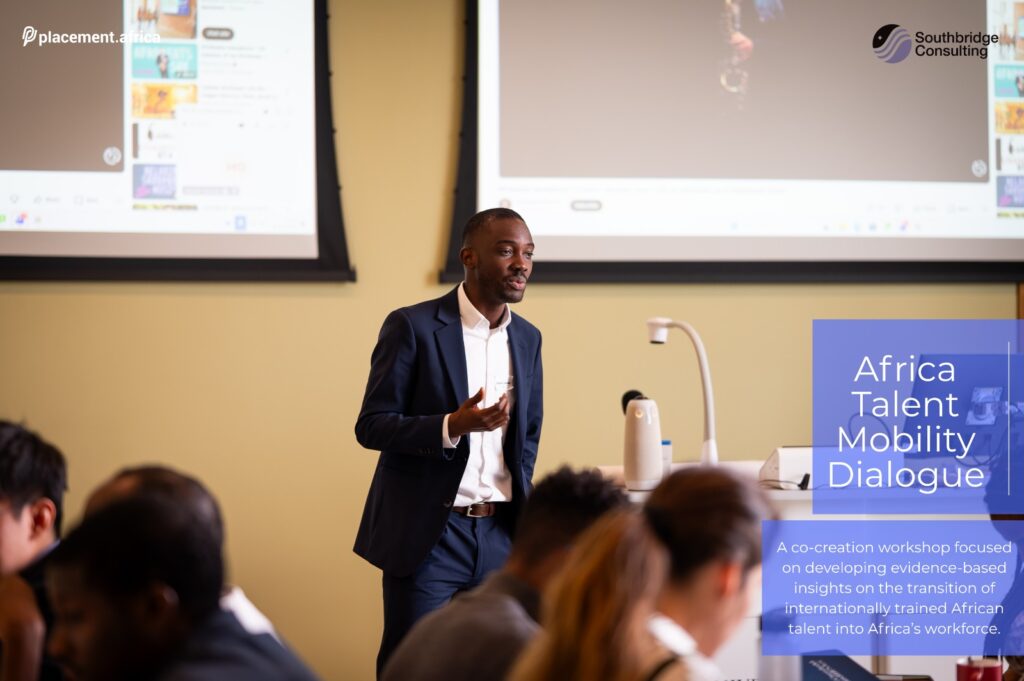
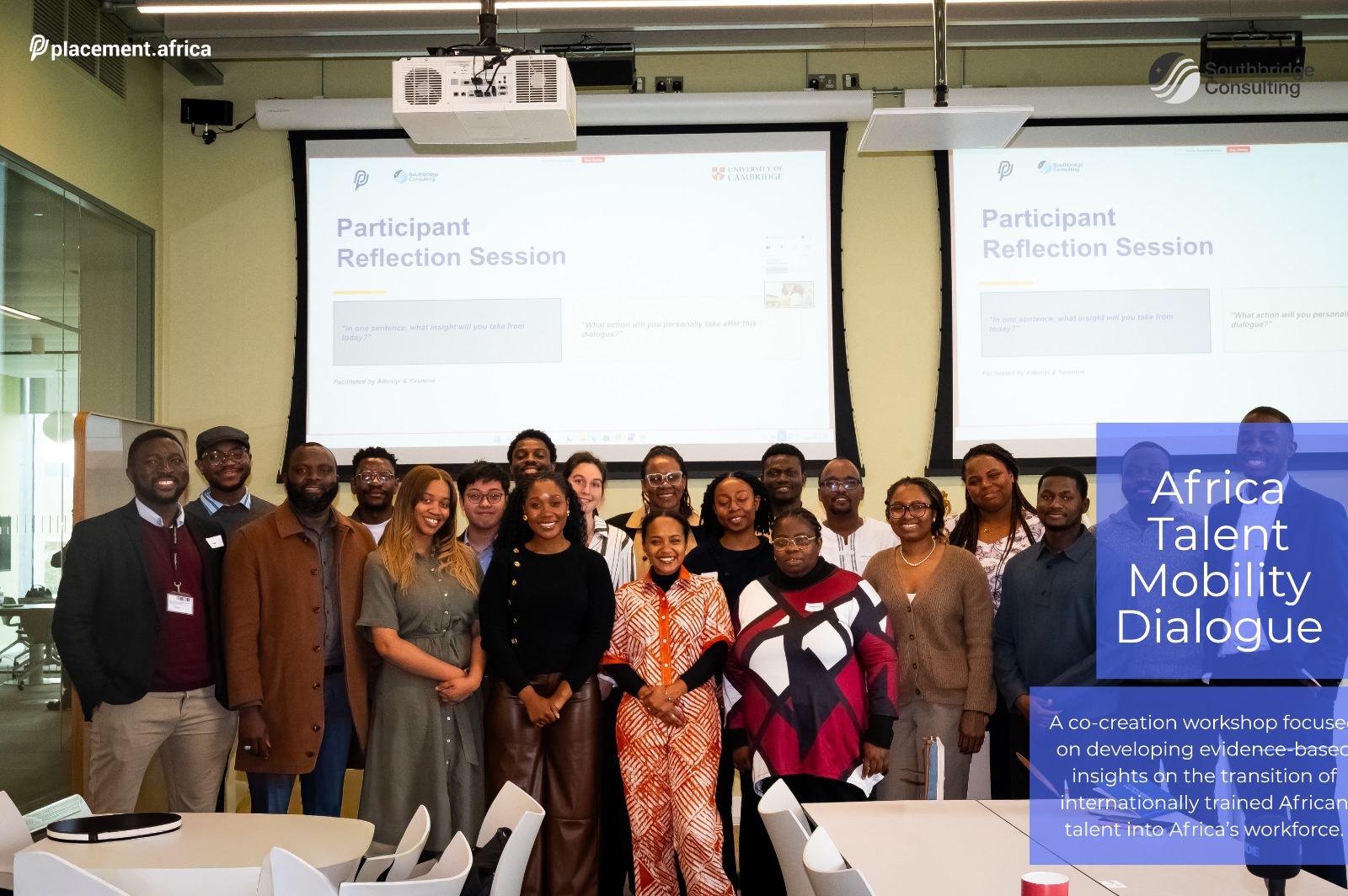
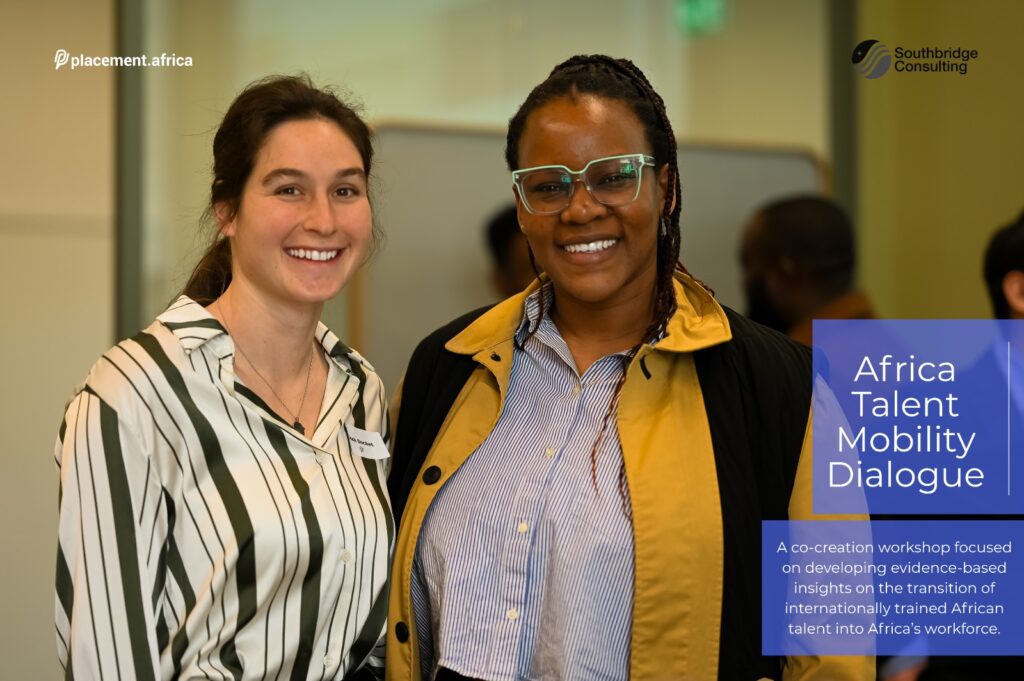
Placement Africa has begun an important effort to better understand what international education providers across the UK must do differently if their education is to remain relevant within a fast evolving African context. We are currently engaging students across 80 universities in the UK, particularly those that are key destinations for African students. As part of this work, we convened the Africa Talent Mobility Dialogue at the University of Cambridge—a co-creation session designed to gather direct insight from students and young professionals.
The goal is simple: to understand what makes a fulfilling return, and what universities, African governments, scholarship providers, and employers must do differently to attract and retain some of Africa’s brightest minds after their education.
Our approach is grounded in the African Continental Qualifications Framework (ACQF). By aligning labour market demand (through ACQF) with talent supply (through our survey of internationally trained Africans), we are able to identify—through structured analysis—where systems are working and where they are not.
The goal is to generate a high-level report on Africa Talent Transition and Return from Overseas Education—what must be done, and how.
While we are still consolidating insights and expanding engagement across more universities, some early signals are already clear:
Interest in returning to Africa is high—but conditional. Many students want to contribute, but only where there are clear opportunities, competitive compensation, and structured pathways.
Career services are not currently designed with African labour markets in mind. Most university career support systems are heavily oriented toward UK and Western job markets. As a result, African students are left without relevant guidance on how to navigate opportunities back home.
Networks often matter more than qualifications. Without strong professional connections in Africa, even highly qualified graduates struggle to navigate entry points.
Employers are not always prepared to absorb globally trained talent. There are gaps in understanding international qualifications, as well as in recruitment practices and onboarding systems.
There is no structured transition system. While strong systems exist to support students leaving Africa to study abroad, very little exists to support their return.
This is the gap – We have built effective systems for outbound mobility. We have not built systems for return and integration.
Our team at Placement Africa a is keen to engage with universities that are serious about strengthening their connection to the African employment ecosystem.
We are connected to a pool of over 8,000 active employers across the continent, and our intelligence on this topic continues to deepen through direct engagement with both talent and industry.
We work with universities to deliver bespoke sessions that equip students with the knowledge, tools, and networks needed to navigate and leverage opportunities across Africa—the world’s most promising growth market.
If your institution is interested in taking a more structured approach to supporting students beyond education and into career opportunities across Africa, we would be delighted to engage. Please contact us at engage@placement.africa.
Thank you.
Written by Placement Africa Editor
